
Dynamic Depressurization Analysis of a Process Vessel
Project Description
Depressurization analysis is a critical safety and operational requirement in process industries, particularly during emergency shutdowns, maintenance, or abnormal operating conditions. This project focuses on the dynamic simulation of a pressurized process vessel undergoing controlled depressurization using a dynamic modeling environment. The system initially operates at a steady-state pressure of approximately 49 psi with continuous feed flow maintaining normal operating conditions.
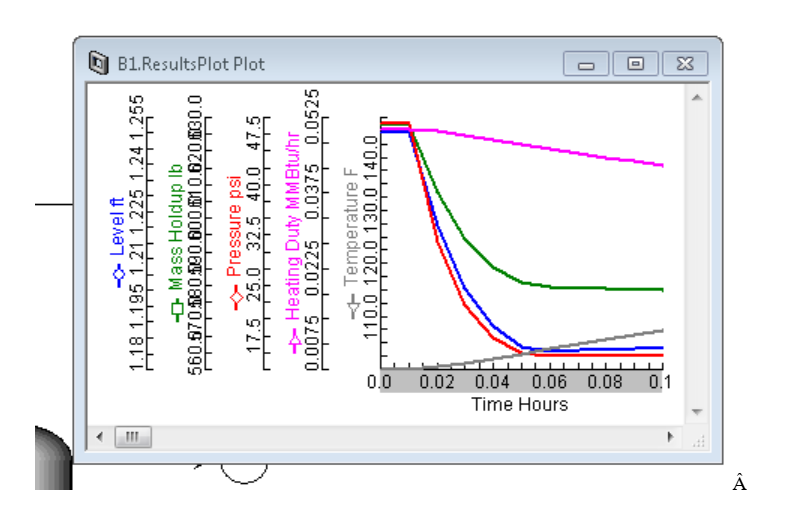
To initiate the depressurization scenario, a shutdown task is implemented in which the feed valve is closed and the vessel boundary condition is changed to atmospheric pressure. Once the isolation occurs, the vessel begins to release its internal contents through the depressurization path, resulting in a gradual pressure decay over time. The dynamic model tracks pressure, temperature, and mass inventory changes within the vessel to determine the total time required to reach safe atmospheric conditions.
This analysis provides insight into transient system behavior during pressure relief operations and helps evaluate whether the depressurization rate meets safety and design requirements. Industrially, such studies are essential in oil and gas, petrochemical, and chemical plants to ensure equipment integrity, prevent thermal stress, and support emergency response planning
Optimization Strategy
The optimization approach focuses on achieving a safe and controlled depressurization profile while minimizing mechanical and thermal stress on the vessel. The first step involves establishing steady-state operating conditions to ensure realistic initial system behavior. A dynamic shutdown task is then defined to simulate operational actions such as feed isolation and boundary pressure adjustment.
Controllers are placed in manual mode to eliminate automatic control interference and allow the system to respond naturally to the shutdown sequence. The depressurization rate is evaluated by analyzing the pressure decay profile over time. If the pressure drop occurs too rapidly, it may cause excessive temperature reduction due to gas expansion, leading to material stress or brittle failure. Conversely, a very slow depressurization may delay maintenance or emergency response.By analyzing system response and adjusting valve characteristics or boundary conditions, the process ensures an optimal balance between operational safety and depressurization efficiency. This strategy supports reliable emergency system design and safe plant operation.
Dynamic Modeling and Transient Behavior
Dynamic simulation captures the time-dependent response of the vessel during pressure release. As the feed is isolated, the internal mass decreases and the pressure gradually declines toward atmospheric conditions. Simultaneously, expansion effects may cause temperature reduction inside the vessel. Monitoring these transient variables helps evaluate system stability and identify potential operational risks during shutdown scenarios.
Pressure Relief and System Response Characteristics
The depressurization behavior depends on vessel volume, fluid properties, and discharge capacity. Larger vessels or restricted outlet paths increase depressurization time, while higher initial pressure accelerates the initial pressure decay rate. Understanding these relationships helps in designing appropriate venting systems and ensuring compliance with safety standards
Operational Safety Considerations
Controlled depressurization prevents rapid pressure and temperature fluctuations that may damage equipment or compromise material strength. Establishing proper shutdown procedures and verifying them through dynamic analysis ensures safe transition from operating to maintenance conditions. This evaluation also supports emergency preparedness and risk
mitigation planning
Projects Insight
Depressurization Time Estimation
● Dynamic simulation provides accurate prediction of the time required to reach
atmospheric pressure.
● This helps in planning shutdown duration and maintenance scheduling.
● Time-based analysis ensures operational readiness during emergency situations.
Pressure–Temperature Interaction
● Rapid pressure drop causes temperature reduction due to gas expansion effects.
● Excessive cooling may lead to thermal stress or material brittleness.
● Monitoring both variables is essential for equipment safety.
Importance of Initial Conditions
● Accurate steady-state initialization ensures realistic transient results.
● Incorrect starting conditions may lead to misleading depressurization behavior.
● Proper initialization improves model reliability.
Role of Valve and Boundary Configuration
● Depressurization rate strongly depends on discharge path capacity.
● Adjusting valve characteristics allows control over pressure decay rate.
● Proper sizing ensures safe and efficient pressure release
Manual Controller Operation
● Switching controllers to manual prevents unwanted control actions during shutdown.
● This allows the system to follow the intended operational sequence.
● Ensures accurate representation of emergency operating conditions
Safety and Risk Reduction Impact
● Controlled depressurization reduces the risk of mechanical failure and operational
hazards.
● Dynamic analysis supports verification of emergency procedures.
● Enhances plant safety and regulatory complianc
Conclusion
The dynamic depressurization study provides a detailed understanding of vessel behavior during shutdown conditions by simulating pressure, temperature, and inventory changes over time. By implementing controlled operational actions and evaluating the transient response, the analysis ensures a safe and efficient pressure reduction strategy. The results support proper equipment design, emergency planning, and operational safety. Overall, dynamic simulation serves as an effective tool for minimizing risk and improving reliability in pressure management operations across industrial process facilities.