
Fire Overpressure Analysis and Relief Load Simulation in Industrial Pressure Vessels
Project Description
Fire overpressure events pose significant hazards to industrial process vessels, particularly those containing flammable liquids or two-phase mixtures. This project focuses on simulating fire scenarios in vessels using Aspen HYSYS and Aspen Plus, following API 521 guidelines. The goal is to determine the required relief flow and the correct sizing of pressure relief devices to ensure safety during fire incidents.
The project explores multiple calculation methodologies including Unwetted (API), Wetted (API), Supercritical, and Semi-Dynamic Flash methods. By modeling vessel behavior under extreme heat conditions, the simulation provides insight into pressure and temperature variations, vapor generation, and liquid vaporization rates. This allows engineers to assess vessel integrity and plan for appropriate safety measures.
Additionally, the project evaluates the effect of vessel design parameters, environmental factors such as insulation, and liquid inventory on the fire relief scenario. The findings enable accurate prediction of relief requirements, effective pressure safety device selection, and compliance with industrial safety standards.
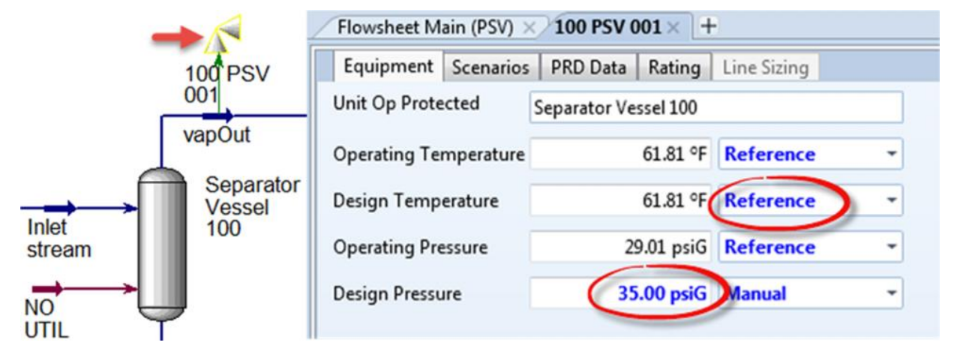
Process Flow Diagarm
Optimization Strategy
To effectively manage fire overpressure scenarios, the project emphasizes a systematic approach to vessel safety. By simulating different fire scenarios, engineers can determine the maximum heat load, vapor generation rate, and pressure rise in vessels under various operational conditions. Safety-critical parameters such as the exposed area of vessels and environmental factors like insulation are evaluated to optimize the fire protection strategy.
The project also integrates multi-vessel and two-phase system analysis to reflect realistic plant operations. Operational strategies include iterative flash calculations to capture dynamic liquid behavior, estimation of latent heat of vaporization, and adjustment of PSV sizing to meet the relief requirements. These strategies ensure vessels remain within safe pressure limits during fire events, reducing operational risk.
Projects Insight
Fire Overpressure Scenarios
- Analyze vessel response to external pool fires and heat flux.
- Evaluate maximum relieving flow and temperature.
- Identify worst-case operational conditions.
Environmental Factors
- Assess insulation thickness and conductivity impact.
- Calculate F factor to adjust heat input reduction.
- Consider presence of firefighting measures.
Calculation Methodologies
- Unwetted (API) for vapor-only vessels.
- Wetted (API) for liquid-containing vessels.
- Semi-Dynamic Flash for batch vaporization scenarios.
Relief Load Determination
- Calculate maximum vapor generation during fire scenarios.
- Determine relieving temperature using flash calculations.
- Optimize PSV sizing for compliance with API 521
Vessel Design Parameters
- Specify diameter, head type, and vessel orientation.
- Determine liquid level and maximum flame height.
- Include elevation and additional exposed area considerations.
Safety and Operational Insights
- Multi-vessel systems allow combined relief load calculations.
- Supercritical calculations handle non-ideal fluid behavior.
- Iterative calculations enhance prediction accuracy and safety reliability
Conclusion
Fire overpressure events present critical safety challenges in industrial operations, particularly in vessels containing flammable liquids, two-phase mixtures, or supercritical fluids. This project highlights the importance of a rigorous analysis to predict pressure and temperature excursions during fire incidents. By leveraging Aspen HYSYS and Aspen Plus, engineers can simulate multiple scenarios, including Unwetted (API), Wetted (API), Supercritical, and Semi-Dynamic Flash methods, to capture both ideal and non-ideal fluid behaviors. Detailed modeling of vessel parameters, environmental factors such as insulation, and liquid inventory ensures that the relief load is accurately determined, and pressure relief devices are appropriately sized. Implementing these strategies reduces the risk of vessel failure, protects personnel and assets, and ensures compliance with API 521 standards. Furthermore, the project demonstrates how iterative calculations, multi-vessel systems, and dynamic flash analysis contribute to a more realistic assessment of fire hazards, enabling operators to make informed decisions regarding plant safety, operational procedures, and emergency preparedness. Overall, the project underscores the critical role of simulation-driven analysis in enhancing industrial safety and reliability while maintaining regulatory compliance