
Blowdown Orifice Design and Depressurization Analysis Using BLOWDOWN™ Technology in Aspen HYSYS
Project Description
Blowdown systems are essential safety components in chemical and petrochemical plants. They are designed to safely depressurize vessels during emergency conditions such as fire exposure or abnormal pressure buildup. Aspen HYSYS provides the BLOWDOWN™ technology, which allows engineers to simulate dynamic depressurization and evaluate the performance of blowdown systems.
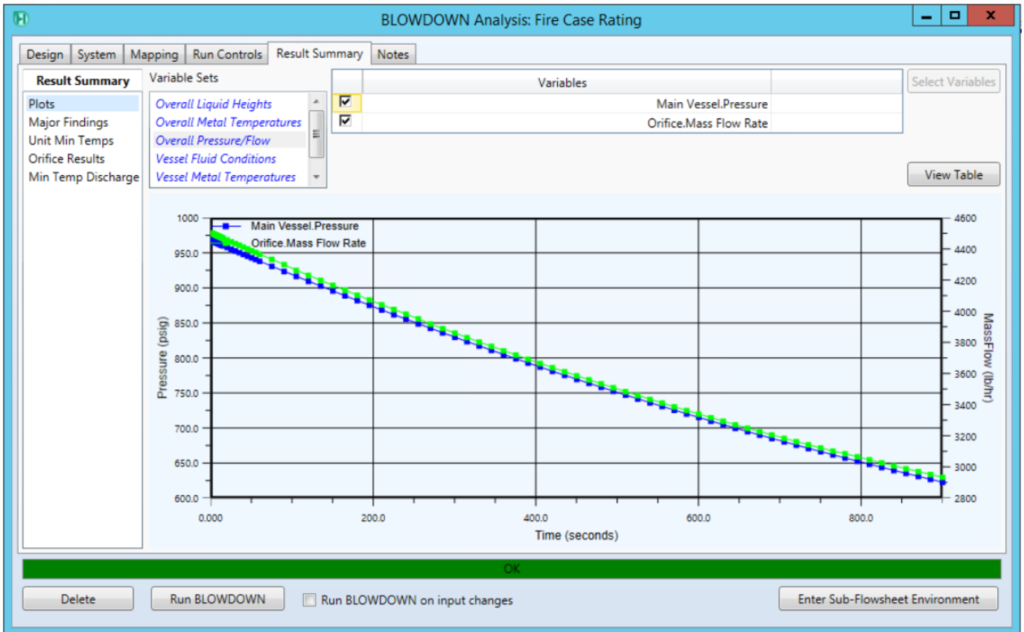
This project focuses on performing basic sizing and rating analysis of a blowdown orifice using Aspen HYSYS. The study includes evaluating system behavior during a pool fire scenario and determining whether the existing blowdown orifice can satisfy the API 521 depressurization design criteria, which requires the system pressure to drop to 50% of the design pressure within 15 minutes.
The simulation also includes a cold case depressurization study to analyze the temperature profile during depressurization and determine whether carbon steel piping can withstand low temperatures. By using BLOWDOWN simulation tools, engineers can design safer pressure relief systems while avoiding unnecessary overdesign and reducing capital costs.
Process Flow Diagarm
Optimization Strategy
The simulation process begins with setting up the blowdown analysis using the Single Vessel BLOWDOWN template in Aspen HYSYS. System parameters such as vessel geometry, fluid composition, pipe dimensions, and heat transfer conditions are defined. The fire case scenario is then simulated to evaluate whether the current blowdown orifice size meets the required depressurization criteria within the specified time.
In the next stage, the Adjust unit operation is used to automatically determine the optimal orifice diameter required to meet the design criteria. Finally, a cold case depressurization simulation is performed under low ambient temperature conditions to evaluate the minimummetal temperature of equipment and determine whether material upgrades, such as switching from carbon steel to stainless steel, are necessary.
Fire Case Blowdown Analysis of Process Vessels Using Aspen HYSYS
This project investigates the depressurization behavior of a process vessel during a pool fire scenario. The simulation evaluates blowdown performance and verifies compliance with API 521 safety standards.
Dynamic Depressurization Modeling for Pressure Relief Systems
This project demonstrates the use of Aspen HYSYS BLOWDOWN™ technology to simulate pressure relief scenarios and optimize blowdown orifice sizing for safe plant operation.
Cold Case Blowdown Simulation and Material Safety Evaluation
This project focuses on analyzing low-temperature effects during blowdown events and determining the suitability of construction materials for safe process operation.
Projects Insight
Blowdown System Fundamentals
- Used to rapidly depressurize equipment during emergencies
- Protects process equipment from overpressure conditions
- Essential for plant safety and regulatory compliance
Blowdown Orifice Design Optimization
- Adjust block used to determine optimal orifice size
- Ensures required depressurization rate is achieved
- Prevents oversizing of blowdown equipment
Fire Case Depressurization Analysis
- Pool fire scenario causes rapid pressure increase
● Vaporization increases blowdown flow rate - System must reach 50% design pressure within 15 minutes
Cold Case Depressurization Study
- Evaluates system behavior under low ambient temperatures
- Identifies potential risks due to extreme cooling
- Determines material limitations during blowdown
Blowdown Orifice Rating
- Existing orifice size evaluated through simulation
- Determines whether the system meets safety criteria
- Provides mass flow rate and pressure profile results
Material Safety Evaluation
- Minimum Design Metal Temperature (MDMT) is critical
- Carbon steel may fail at extremely low temperatures
- Stainless steel may be required for safer operation
Conclusion
The BLOWDOWN™ simulation in Aspen HYSYS provides a powerful method for analyzing emergency depressurization scenarios and designing blowdown systems. Through fire case and cold case simulations, engineers can evaluate system performance, determine appropriate orifice sizing, and assess equipment material limitations. By applying these analyses, process engineers can design safer pressure relief systems while minimizing unnecessary equipment costs and ensuring compliance with industrial safety standards.