
Dynamic Blowdown System Analysis Using BLOWDOWN™ Templates in Aspen HYSYS
Project Description
Blowdown analysis is an important aspect of process safety and equipment protection in chemical and petrochemical plants. Aspen HYSYS provides the BLOWDOWN™ technology to simulate the depressurization behavior of vessels and piping systems during emergency or controlled shutdown conditions. This project focuses on understanding how additional BLOWDOWN templates can be used to analyze different flowsheet configurations.
The BLOWDOWN™ tool in Aspen HYSYS allows engineers to study pressure and temperature changes during vessel depressurization. AspenTech restricts certain flowsheet connections and limits the number of unit operations within BLOWDOWN models to ensure fast and stable simulation performance. Additional templates extend the functionality of the tool and allow users to simulate more complex system configurations.
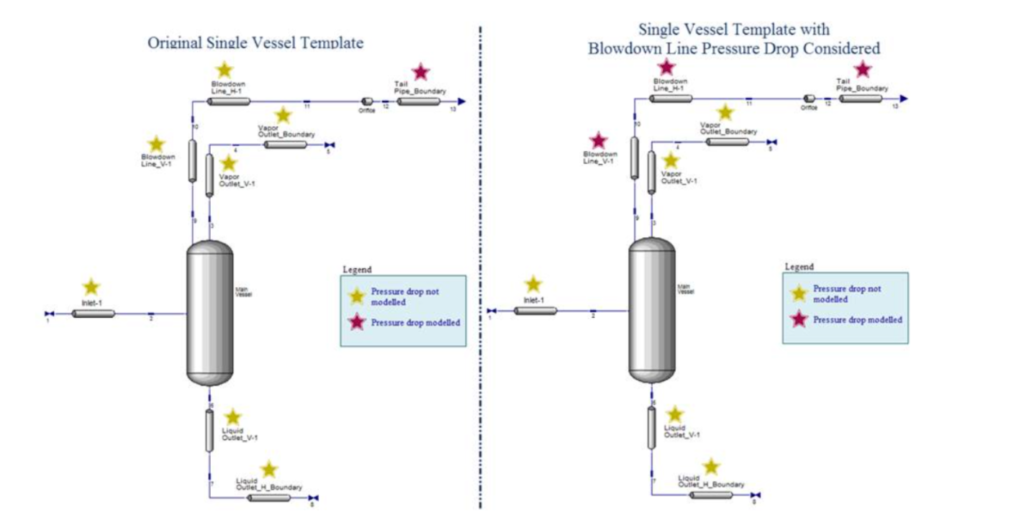
In this project, different BLOWDOWN templates are explored to analyze pressure drop, vapor depressurization, and liquid-side blowdown scenarios. The templates provide predefined configurations that help engineers quickly evaluate system behavior and determine appropriate blowdown orifice sizes for safe plant operation.
Process Flow Diagarm
Optimization Strategy
The first operational strategy involves deploying BLOWDOWN templates within Aspen HYSYS by placing the template files in the software’s template directory. This allows users to access the templates directly from the BLOWDOWN analysis interface. Once added, engineers can select the appropriate template from the template dropdown menu when creating a new blowdown analysis.
Another strategy is to load the templates directly through the Aspen HYSYS graphical user interface. In this approach, the user browses and selects the template file during BLOWDOWN setup without modifying the installation directory. This method provides flexibility and allows users to test multiple template configurations without requiring administrative permissions.
Simulation of Emergency Depressurization Using Aspen HYSYS BLOWDOWN Technology
This project studies how Aspen HYSYS BLOWDOWN™ models can be used to analyze emergency vessel depressurization. The simulation evaluates pressure drop behavior and system response during blowdown operations.
Process Safety Analysis of Blowdown Systems in Aspen HYSYS
This project focuses on evaluating the performance of blowdown systems in industrial plants. Using predefined templates, the simulation analyzes pressure relief and fluid discharge during controlled depressurization.
Modeling Blowdown and Pressure Relief Systems with Aspen HYSYS Templates
This project demonstrates the use of BLOWDOWN templates to simulate vessel depressurization and disposal system behavior. The model helps engineers analyze temperature and pressure profiles during blowdown events.
Projects Insight
BLOWDOWN Technology in Aspen HYSYS
- Used for dynamic depressurization analysis
- Simulates pressure and temperature changes in vessels
- Supports process safety and emergency design studies
Blowdown Line Pressure Drop Consideration
- Pressure drop affects depressurization rate
- Important when blowdown piping is undersized
- Influences overall system safety
Template-Based Simulation
- Templates simplify model setup
- Predefined configurations reduce modeling time
- Ensures stable and robust simulations
Knockout Drum Integration
- Separates liquid from vapor streams
- Protects downstream disposal systems
- Maintains safe pressure conditions
Single Vessel Blowdown Analysis
- Used for basic vessel depressurization studies
- Includes upstream and downstream piping effects
- Helps determine appropriate blowdown orifice size
Industrial Application of Blowdown Studies
- Used in refineries and chemical plants
- Supports emergency shutdown planning
- Helps design safer pressure relief systems
Conclusion
The BLOWDOWN™ technology in Aspen HYSYS provides a powerful tool for analyzing vessel depressurization and pressure relief scenarios in industrial processes. By using specialized templates, engineers can efficiently model different blowdown configurations and evaluate pressure drop effects in piping and disposal systems. These simulations play a critical role in ensuring plant safety, optimizing blowdown system design, and preventing equipment damage during emergency situations.