
Bio-Refining & Sustainable Fuels (SAF) Process Simulation
Simu-Link models bio-refining and sustainable fuel processes in Aspen Plus and Aspen HYSYS: biomass pyrolysis, fermentation to alcohols, anaerobic digestion and hydroprocessing of renewable oils.
Our models give you the mass and energy balances, yields and techno-economics needed to assess biofuel and sustainable aviation fuel (SAF) pathways.
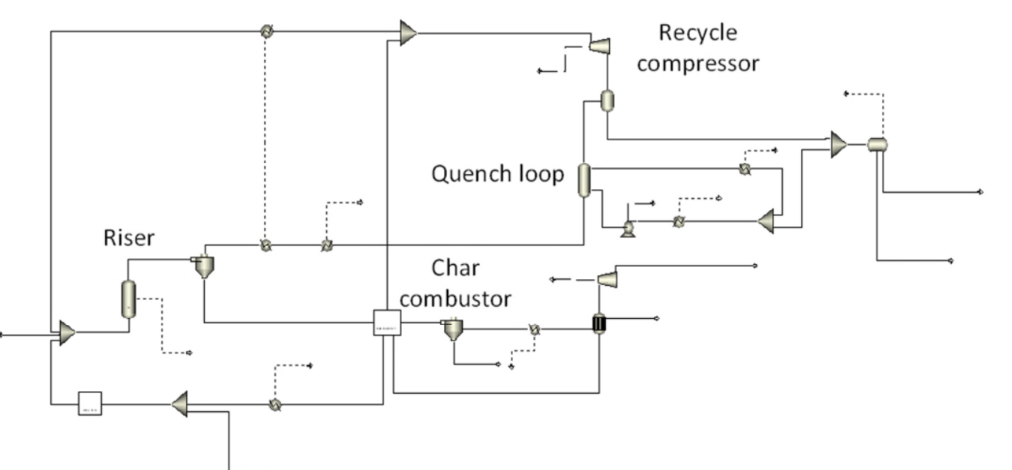
Bio-Refining: Modeling Biomass and Renewable Feedstocks
Biomass components are non-conventional and need careful characterization. We define feedstocks using proximate and ultimate analysis, heating values and databanks such as BIOFEED, then model drying, pyrolysis, fermentation and separation steps.
For renewable diesel and SAF routes, we simulate hydroprocessing of vegetable and waste oils, including co-processing with petroleum fractions.
Key Deliverables
Every bio-refining study ends with documented models and results.
Process Models
Native Aspen Plus or HYSYS files with feedstock characterization and documented assumptions.
Yields & Balances
Product yields, mass and energy balances and utility demands for each process step.
Pathway Comparison
Side-by-side evaluation of conversion routes, operating conditions and product slates.
Techno-Economics
CAPEX, OPEX and minimum selling price estimates for the fuel or chemical product.
Processes We Model
Our bio-refining work covers:
- Biomass pyrolysis to bio-oil and char
- Lignocellulosic conversion and biomass drying
- Hydroprocessing of vegetable and waste cooking oils
- Bioethanol and biobutanol (ABE) fermentation
- Anaerobic digestion and biogas production
- Bio-based chemicals such as 1,4-butanediol
SAF pathways such as HEFA rely on the same hydroprocessing and separation steps, so these models are a solid starting point for sustainable aviation fuel studies.
Example Bio-Refining Projects
Frequently Asked Questions
How do you model biomass in Aspen Plus?
Biomass is defined as a non-conventional component using proximate and ultimate analysis and heating value correlations, or through databanks such as BIOFEED. Reactions are then represented with yield, stoichiometric or kinetic reactors depending on the data available.
Can you simulate SAF production routes?
We model the core steps used in SAF pathways, including hydroprocessing of vegetable and waste oils, fermentation to alcohols, and pyrolysis. These can be combined into a full pathway model for your feedstock.
Can you estimate the minimum fuel selling price?
Yes. We combine the simulation with equipment sizing and cost estimation to calculate CAPEX, OPEX and the minimum selling price of the product.
Do you have ready-made biofuel models?
Yes. Our library includes models for pyrolysis, fermentation, hydroprocessing and anaerobic digestion that can be adapted to your feedstock.