
Detailed Process Design
Detailed Process Design is the comprehensive engineering phase where every aspect of a process plant is defined—ranging from equipment sizing and piping layout to control systems and utilities. It transforms simulation data into construction-ready technical documentation, ensuring safe, efficient, and scalable plant operation.
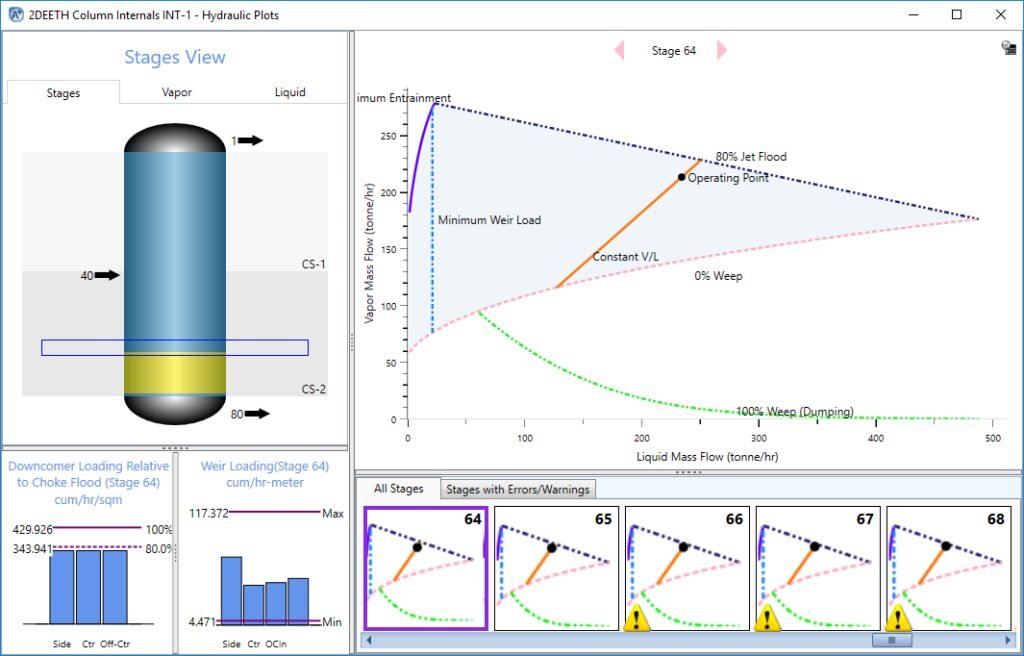
At Simu-Link, our detailed process design ensures alignment with plant requirements, industry codes, and operational efficiency. We utilize advanced tools such as Aspen EDR, Aspen Shell & Tube, Aspen Exchanger Design & Rating, CHEMCAD, and Tower Design to perform rigorous calculations for equipment sizing, thermal rating, and mechanical design. These platforms enable us to deliver high-fidelity specifications for heat exchangers, columns, and reactors, ensuring safety, performance, and compliance with standards like ASME, TEMA, and API.
Key Deliverables
Our key deliverables reflect Simu-Link’s commitment to precision, compliance, and performance in every detailed design project. Each outcome is developed using advanced engineering tools and validated against global standards, ensuring that every design element meets performance, safety, and integration requirements across industrial environments..
Mechanical Details
Complete specifications for exchangers, reactors, and column internals.
Code Compliance
Designed in accordance with ASME, TEMA, API, and other global standards.
Verified Simulations
Validated using Aspen EDR, Tower, ChemCAD, and other leading tools.
Project Documents
Includes datasheets, P&IDs, and fabrication-ready drawings.

Core Strengths in Detailed Process Design
Our detailed process design service ensures technically sound and fabrication-ready solutions, helping industries reduce design errors, improve reliability, and meet performance benchmarks.
- Enhances accuracy in equipment sizing and specification
- Reduces commissioning risks through validated design models
- Ensures compliance with ASME, TEMA, and API standards
- Speeds up procurement and fabrication with complete documentation
Our approach results in smarter project execution, enabling safer operations, cost savings, and faster time-to-market for complex process systems.
How We Work
- Design basis – we confirm capacities, feed and product specifications, site conditions and applicable codes.
- Heat and material balance – taken from a validated process simulation.
- Equipment sizing and rating – vessels, columns, heat exchangers, pumps and compressors.
- Process data sheets – specifications for each item, for vendors and mechanical design.
- Design review – with your team before final issue.
Typical Applications
Detailed process design applies to new units, revamps and pilot plants, including distillation columns, reactors, separators, heat exchangers and rotating equipment. The process data sheets we produce give vendors and mechanical designers consistent, traceable specifications based on validated simulation results. Assumptions and design margins are listed openly so your team can review them.
What We Need From You
For detailed process design we need the process simulation or heat and material balance if available, the design basis, site and utility conditions, and any client or project standards.
Frequently Asked Questions
What is included in a detailed process design package?
Typically the heat and material balance, equipment list, sizing calculations and process data sheets, with assumptions documented. The exact scope is agreed at the start.
How does detailed process design use simulation results?
The simulation provides validated flows, compositions and duties. These feed directly into equipment sizing, so specifications stay consistent with the process.
Can you size a single piece of equipment?
Yes. A single column, heat exchanger or separator can be sized and rated as a standalone task.
Do you work with vendors and fabricators?
We prepare the process specifications that vendors and fabricators need and can answer their technical queries during bidding and design. Mechanical design and fabrication remain with the vendor.
Can detailed process design start without a simulation?
Yes. If no model exists, we first build one so that equipment sizing is based on consistent heat and material balances.