
Chemical Process Simulation
Chemical process simulation is the virtual modeling of industrial operations used to design, evaluate, and optimize chemical processes under realistic conditions. It enables engineers to assess performance, improve efficiency, and make informed decisions before physical implementation.
At Simu-Link, we offer both steady-state and dynamic simulations using advanced platforms such as Aspen Plus, Aspen HYSYS, and DWSIM. Our models are built on DIPPR®-validated thermophysical data and include over 1000 binary interaction parameters. By applying robust thermodynamic models like NRTL, UNIFAC, Peng-Robinson, and Soave-Redlich-Kwong, we ensure accurate representation of complex process behaviors across a wide range of chemical systems.
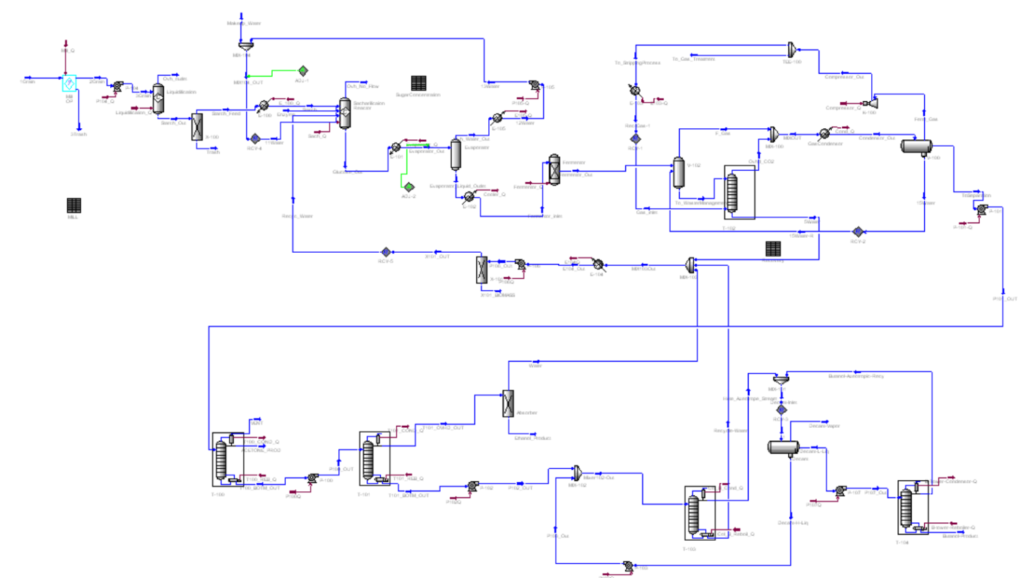
How Can Dynamic Simulation Evaluate Plant Performance Before Startup?
Dynamic simulation evaluates plant performance before startup by virtually modeling real-time process behavior under varying operating conditions. At Simu-Link, we use platforms like Aspen HYSYS, combined with validated thermodynamic data, to replicate time-dependent responses in flow, temperature, and pressure. This allows engineers to assess control strategies, identify design flaws, and simulate critical scenarios such as startup, shutdown, and process disturbances. The result is improved decision-making, minimized risk, and a smoother, safer transition from design to full-scale operation.
Key Deliverables
Simu-Link’s simulation solutions help industries analyze and refine process flows digitally—before they reach the plant floor. Our goal is to ensure your process is efficient, scalable, and investment-ready.
High-Fidelity Modeling
We use real time thermodynamic data and interaction parameters for precise process behavior.
Energy Optimization
Simulations identify energy-saving opportunities and improve heat integration strategies.
Fast Turnaround
We enable faster process development through advanced simulation workflows.
Scalable Design
Our models support reliable scale-up from lab to pilot to full industrial deployment.

Core Strengths in Chemical Process Simulation
Simu-Link’s simulation-first approach empowers industries to explore process behavior, energy flows, and design alternatives before implementation. This not only reduces design risk but also ensures better planning, cost savings, and improved decision-making from the earliest project stages
- Avoid costly design errors through early-stage virtual validation
- Identify inefficiencies in flow, energy use, and unit performance
- Optimize energy consumption with integrated utility and heat balance modeling
- Minimize operational risks by simulating real-world process conditions
By digitally modeling chemical processes under real-world conditions, we enable clients to make informed decisions at every stage from initial concept to full-scale operation while reducing costs and accelerating delivery.
How We Work
- Scope review – we confirm the process, the components and the questions the chemical process simulation must answer.
- Thermodynamics – we select and justify a property method for your system and check it against available data.
- Model build – a steady-state flowsheet first, then dynamic models where control or transient behavior matters.
- Validation – results are compared with plant, pilot or literature data, and deviations are documented.
- Handover – native Aspen files, stream tables and a short report explaining assumptions and limits.
What We Need From You
To start a chemical process simulation we need a PFD or process description, feed compositions and flow rates, operating pressures and temperatures, any plant or laboratory data, and the decisions the model should support. If some data is missing, we state the assumptions we use so you can review them.
Frequently Asked Questions
Steady-state or dynamic chemical process simulation – which do I need?
Steady-state simulation gives heat and material balances, equipment duties and sizing data. Dynamic simulation is needed when you study control behavior, startup and shutdown, or depressurization and relief.
Can you work with our existing Aspen files?
Yes. We can review, debug, extend or re-validate existing Aspen Plus and Aspen HYSYS models, and document what was changed.
How do you make sure the results are reliable?
We justify the property method, check mass and energy balance closure and compare results with real data wherever it exists. Remaining uncertainties are listed in the report.